Combipro Sterilization Cycles
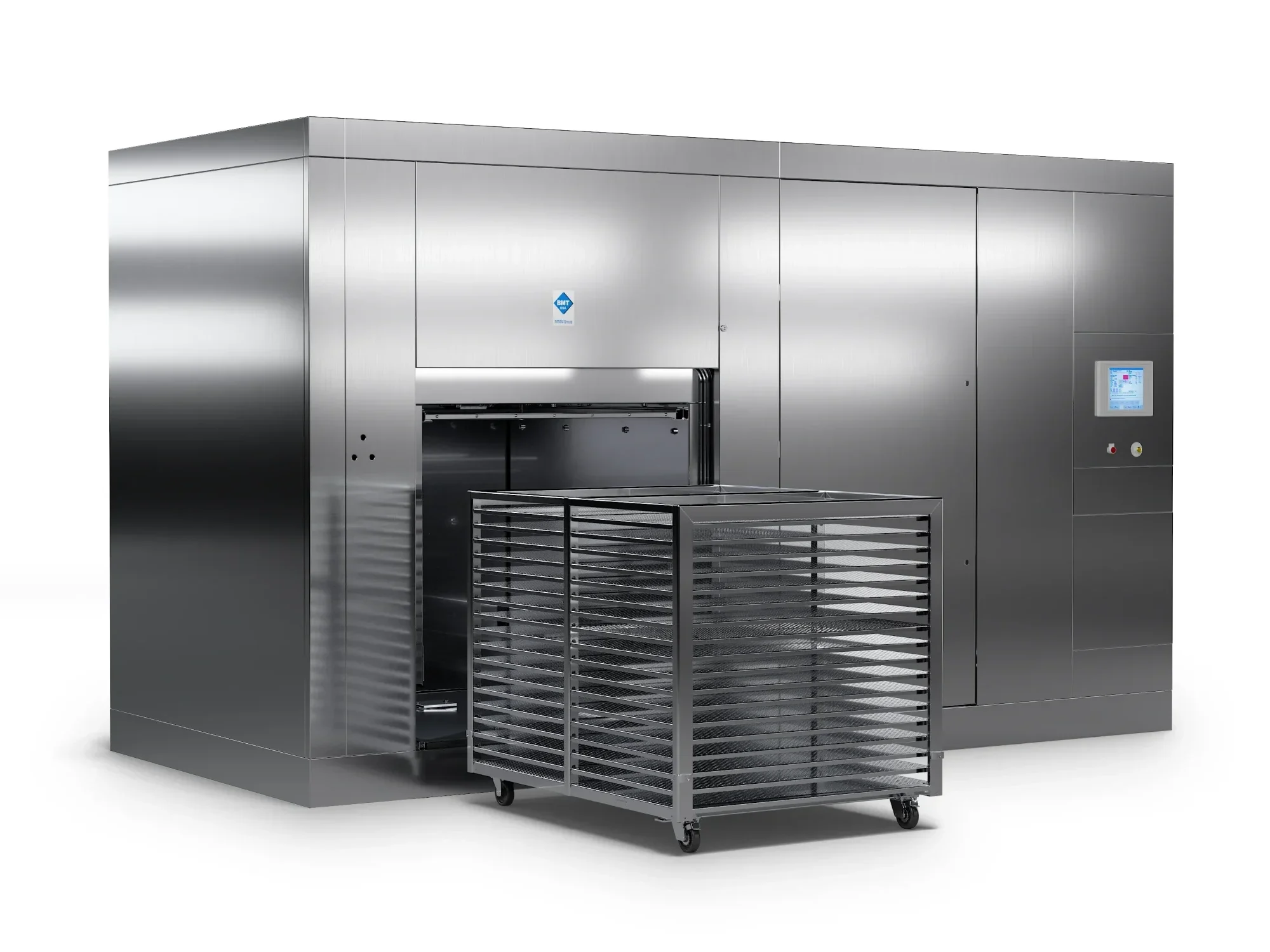
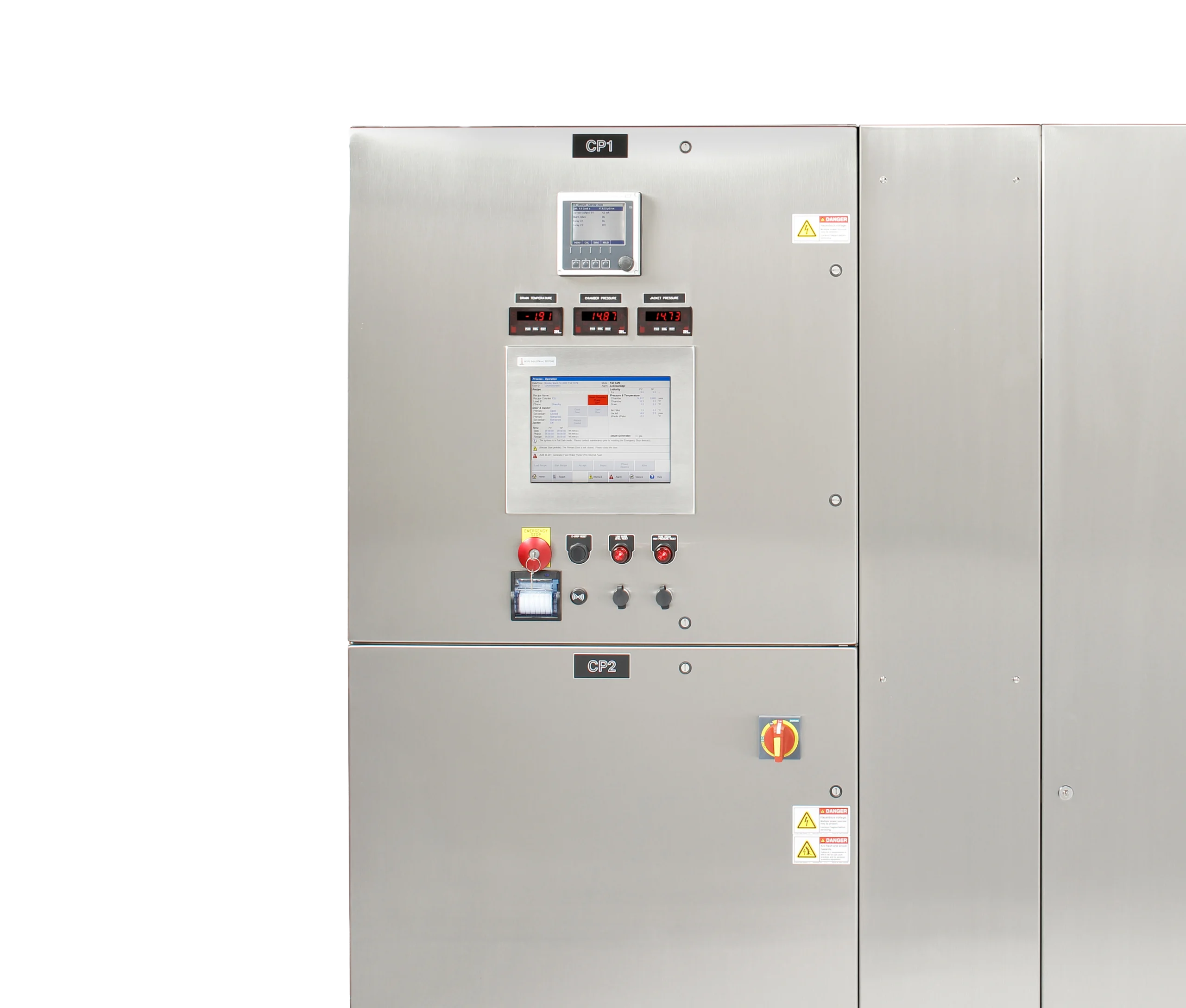
Combipro sterilizers can be programmed with any combination of saturated steam, vacuum, steam-air mixture, and hot water cascade sterilization cycles, with configurable parameters for each cycle phase. The programmed cycle recipes are securely stored in the control system memory and can be effortlessly retrieved and initiated via the touchscreen operator interface. Unauthorized modifications are prevented through a multi-level authentication system, ensuring recipe integrity and operational compliance.
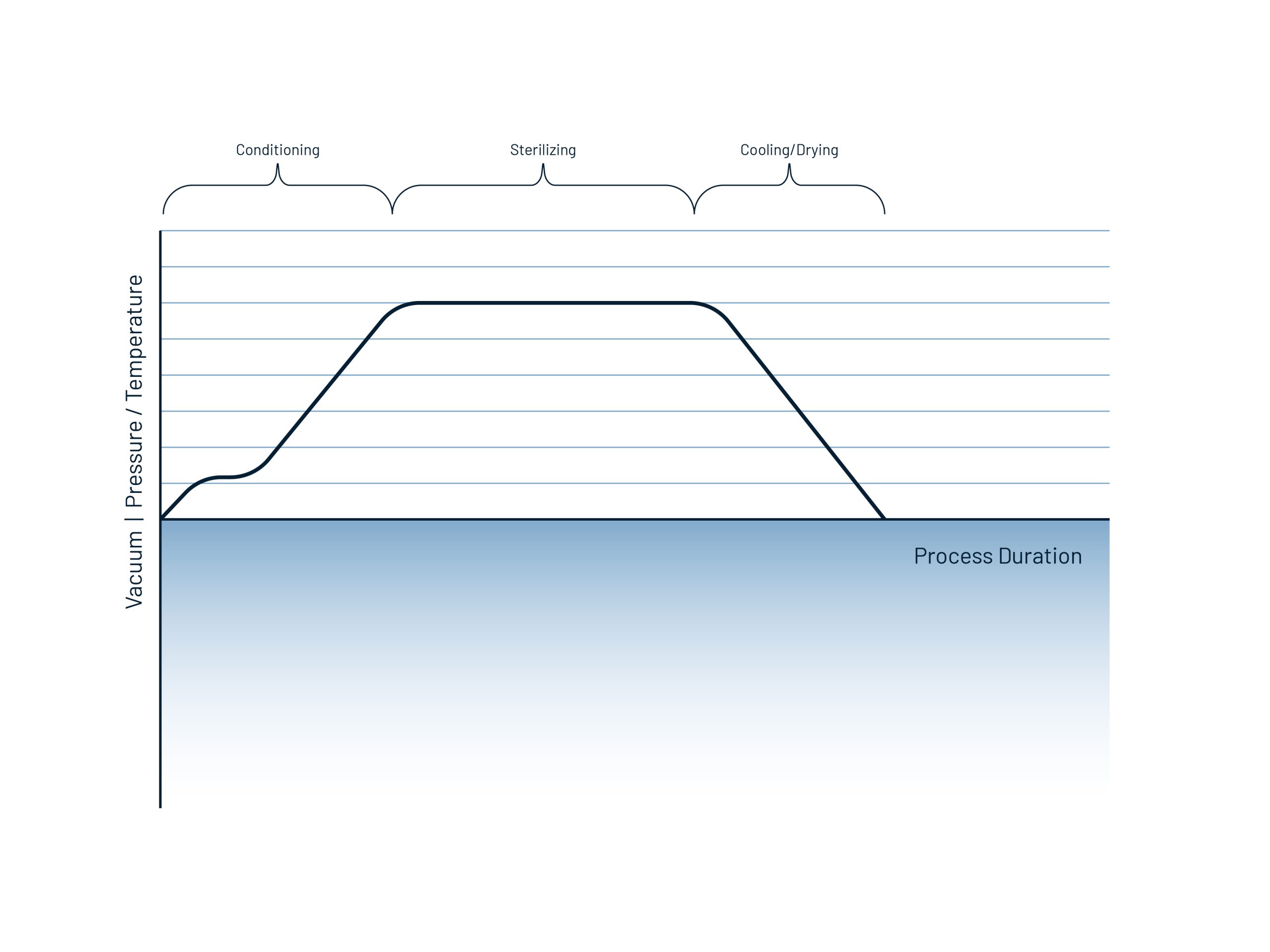
Pre-Vacuum with Drying
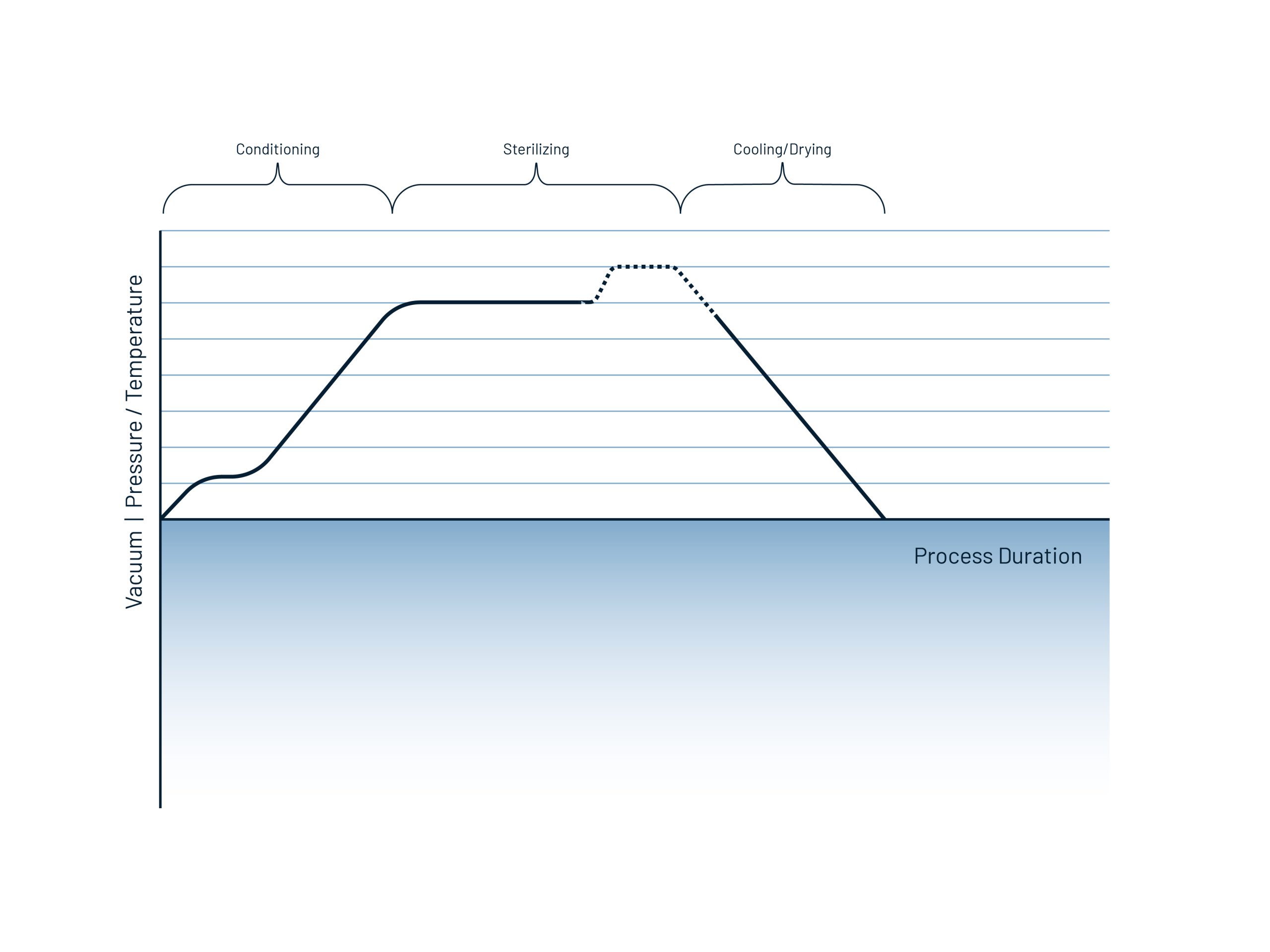
The load is preconditioned with alternating vacuum and steam pulses, then heated to an exposure temperature between 110°C and 135°C. The exposure temperature is maintained for a specified period, after which rapid drying begins with fast exhaust and pulling a deep vacuum.
For loads where trapped moisture can be difficult to remove, air pulses can be added to the drying phase. The air pulses can also be heated to further accelerate the drying.
Gravity Air Removal with Ramped Exhaust
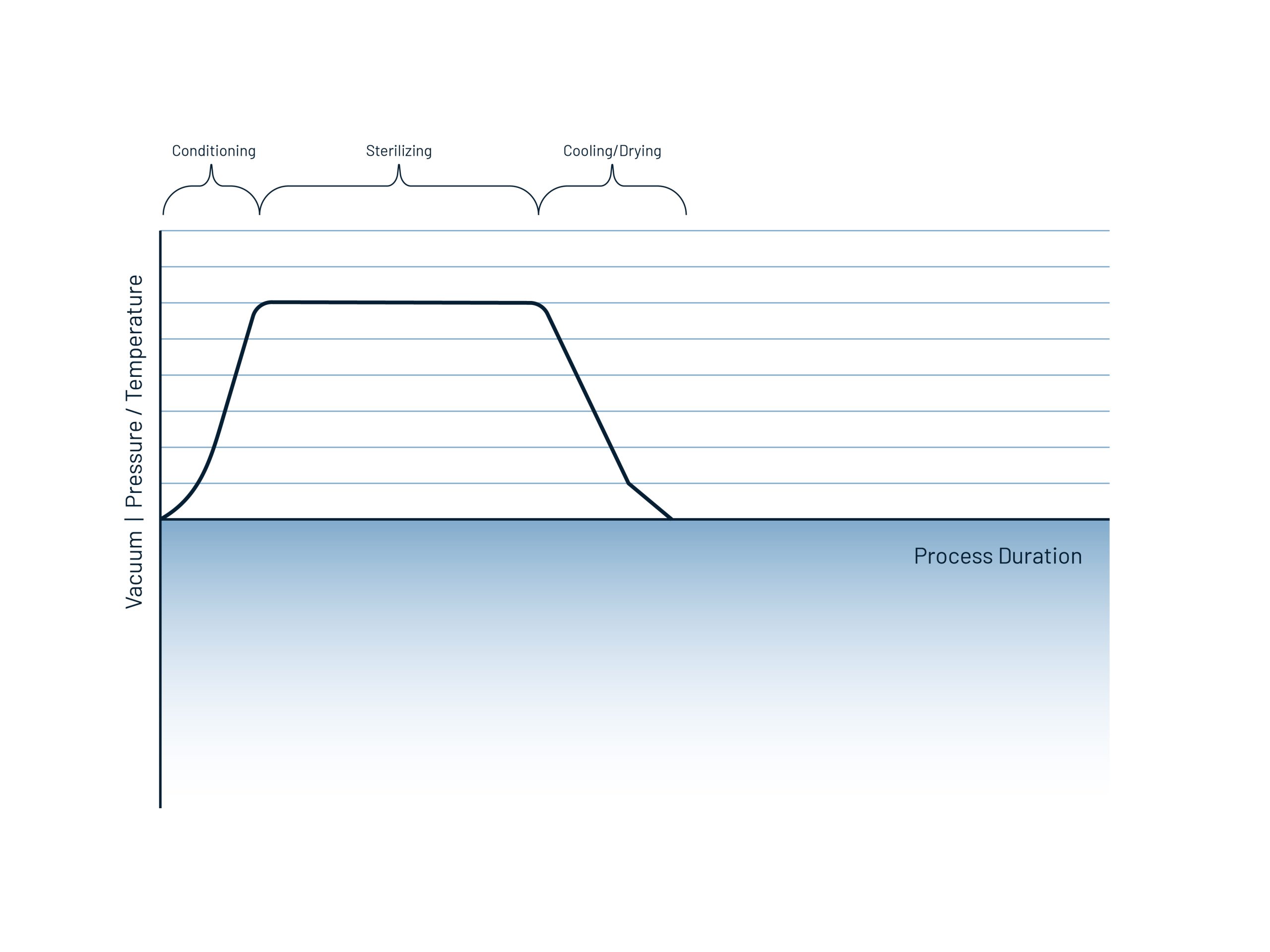
Steam is introduced into the chamber, displacing air and forcing it out through a drain vent. Once the air is fully removed, the load is heated to an exposure temperature between 110°C and 135°C. The exposure temperature is maintained for a set period to achieve sterilization. At the end of the sterilization phase, the steam is slowly exhausted from the chamber, allowing the load to cool back to ambient temperature.
Gravity Air Removal with Jacket Water Cooling
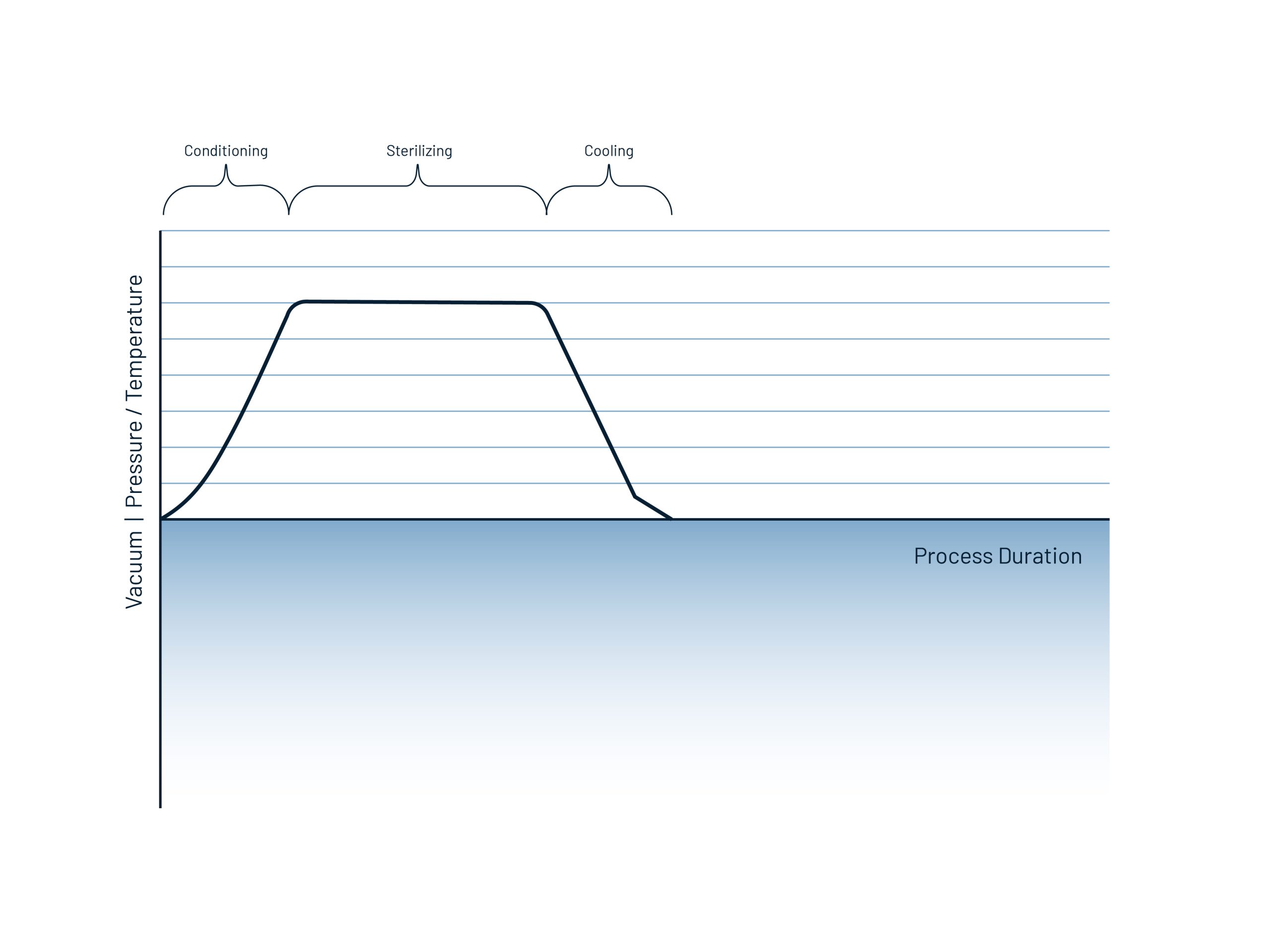
Steam is introduced into the chamber, displacing air and forcing it out through a drain vent. Once the air is fully removed, the load is heated to an exposure temperature between 110°C and 135°C. The exposure temperature is maintained for a specified time period to achieve sterilization.
At the end of the sterilization phase, cooling begins by injecting air into the chamber at a pressure equal to that inside the product container to prevent damage or deformation. To accelerate cooling, cold water is circulated through the chamber jacket. This lowers the temperature of the chamber walls, creating a temperature gradient that draws heat away from the load. As heat transfers from the load to the cooler chamber surfaces, the overall cooling process is sped up while maintaining controlled conditions that protect the integrity of the product and its container.
Steam-Air Mixture
Pure steam is pumped into the chamber while being injected with compressed air at a preset differential over-pressure. The steam and air are circulated and mixed by internal fans, rapidly heating up to an exposure temperature between 110°C up to 135°C. The exposure temperature is maintained for a specified period, after which the fans begin blowing cool air across the load.
During the cooling phase, a support pressure is maintained to prevent damaging the product containers. At the end of the cycle, the load leaves the chamber dry and ready for further handling or labeling.
Hot Water Cascade
Purified water is circulated by a high capacity pump through an external heat exchanger that is heated by plant steam. The water is then evenly distributed through a perforated tray over the load. The efficient heat transfer properties of water allows for rapidly heating the load.
Compressed air at an over-pressure is simultaneously injected into the chamber to compensate for the rising temperature and pressure that builds inside the product containers, preventing damage or deformation.
At the end of the cycle, the water is cooled by an external heat exchanger using cooling or chilled water. The cooled circulating water is continuously sprayed over the load, quickly bring the temperature back to ambient.